
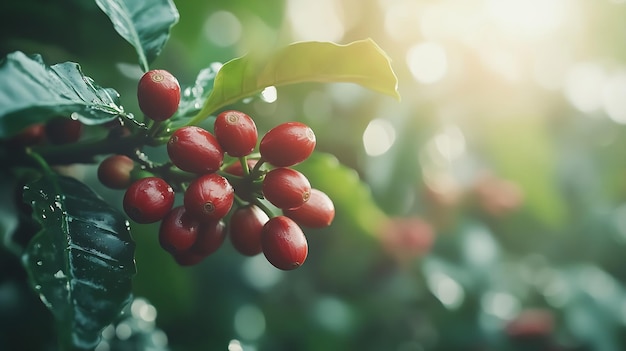
Coffee is more than just a beverage; it’s a story, a journey that begins with a small seed and ends with the rich aroma in your cup. Understanding the path your coffee takes from bean to cup is essential to appreciating its value, and nowhere is this story more fascinating than in Uganda, one of the world’s leading coffee producers.
In this article, we’ll take you through the journey of coffee production in Uganda, from the farm to your morning brew, exploring the hard work, dedication, and unique practices that make Ugandan coffee so special.
Step 1: Coffee Cultivation in Uganda
Uganda has specialized in producing 2 types of Coffee: Robusta and Arabica coffee. Robusta coffee is grown at lower altitude areas while Arabica coffee is grown in mountainous regions (higher altitudes). Coffee farming in Uganda is deeply rooted in the culture and economy, with over 1.8 million households depending on coffee for their livelihood.
Coffee is grown in five regions mainly the Central, Western, Southwestern, Northern and Eastern regions. Uganda’s altitude, climate, and soil give the beans their unique character.
Step 2: Harvesting the Coffee Beans
In Uganda, coffee harvesting is mostly done by hand. This manual process allows farmers to selectively pick only the ripe, red coffee cherries, ensuring the highest quality beans. The harvest season varies depending on the region and altitude, but generally, the main harvest occurs between October and February for Arabica coffee, and May to August for Robusta.
The selective harvesting process is labour-intensive and requires a deep understanding of the crop, as coffee cherries on the same plant can ripen at different times. Farmers often pass through their fields multiple times during harvest season to pick only the ripest cherries.
Step 3: Processing the Coffee Cherries
After the cherries are harvested, they must be processed to extract the beans. In Uganda, the commonly employed primary processing methods are the wet process and the dry process.
Wet Processing (Washed Coffee): The cherries are pulped to remove the outer skin, and the beans are fermented in water to break down the mucilage. After fermentation, the beans are washed and dried. This method is commonly used for Arabica coffee.
Dry Processing (Natural Coffee): The cherries are spread out in the sun to dry with the fruit still attached to the bean. Once the cherries are fully dried, the beans are removed from the fruit. This method is more common for Robusta beans.
Both methods require precision and care to ensure that the beans maintain their flavour profile.
Step 4: Coffee Drying and Milling
Once the coffee beans are processed, they must be thoroughly dried to reduce their moisture content to around 11-12%. In Uganda, this is often done by spreading the beans on large drying tables or concrete patios under the sun. Farmers regularly turn the beans to ensure even drying.
After drying, the beans go through milling to remove the parchment in washed coffee or the outer dried fruit in natural coffee. This process reveals the green coffee beans, which are then sorted by size and quality.
Step 5: Exporting Uganda’s Coffee
Once the beans are milled and sorted, they are packed into jute bags and sent to exporters. Uganda exports most of its coffee, with the European Union being the largest market. Ugandan coffee is renowned for its quality, and many global roasters prize it for its unique flavour profile.
At this stage, the green coffee beans still haven’t reached their full potential. The next step is where the magic truly happens.
Step 6: Roasting: Transforming Beans into Brew
Roasting is a critical step in transforming green coffee beans into the rich, aromatic coffee we enjoy. While the bean itself plays a crucial role, much of the coffee’s aroma and flavour is developed during the roasting process. The duration of roasting significantly influences key factors like body, acidity, and the overall flavour profile of your coffee beans.
Roasters carefully control the temperature and timing to achieve different roast profiles from light to dark roasts. Ugandan coffee is especially versatile and can be roasted to suit a variety of preferences.
Step 7: Brewing: Bringing the Journey to a Close
Finally, the roasted beans are ready to be brewed into the perfect cup of coffee. Whether you use a French press, pour-over, or espresso machine, brewing is the final step that allows you to experience the full journey of coffee. The time, care, and dedication put in by farmers and roasters all come together to create that first sip; a taste that tells a story of culture, hard work, and unique flavour profiles.
Sustainability in the coffee value chain
The journey of coffee from bean to cup is not just about flavour; it’s also about sustainability and supporting the livelihoods of smallholder farmers. In Uganda, coffee is a vital economic driver, and efforts are being made to promote more sustainable practices to ensure the future of the industry.
Coffee farmers are adopting more environmentally friendly practices and programs focused on organic farming, water conservation, and reforestation are gaining momentum, helping Uganda produce coffee in a way that preserves its natural resources.
Conclusion
The journey of coffee from bean to cup is a long and intricate process beginning from the cultivation of the coffee plants to the final brewing, every step in this journey adds value to the final product. When you sip a cup of Ugandan coffee, you’re not just tasting a beverage; you’re experiencing a story, a tradition, and the dedication of the people who make it all possible.
Next time you brew your coffee, take a moment to savour the journey that your coffee has travelled, from the farms of Uganda to your cup.